
Build a repeatable deck across action and buy phases, track imagination before shopping, and prioritize a stable seven-night plan over one explosive turn.
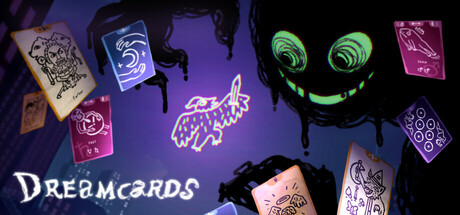
A first Dreamcards run should be built for consistency across seven nights, not for one impressive combo. Use the action phase to cycle cards and generate imagination, spend that imagination deliberately in the buy phase, and check whether each new card improves the route to conscience and the lucid-dream win condition.
First-run decision loop
- Read the current monster and visible phase before playing the first card.
- Use Resource Preview to see the current gain or spend before committing.
- In the action phase, favor cards that both advance the present turn and improve access to the deck's useful cards.
- Before the buy phase, note available imagination and decide what problem the purchase must solve.
- Buy a card only when it strengthens the same plan or removes a clear weakness.
- At the end of the night, record why the score was won or lost before changing several parts of the deck at once.
Dreamcards officially lists more than 100 cards across six strategies. “Can be mixed” does not mean every strategy must enter one deck. A smaller plan is easier to debug: choose a repeatable way to gain imagination, a way to turn the deck toward conscience, and a way to avoid drawing cards that no longer serve either goal.
Action phase priorities
Treat the action phase as setup and conversion. Check the selected character, active-effect particles, and limited-use counters before using a card. If Resource Preview changes after selecting a character, the official update says that can be an intended modifier. Compare the current preview instead of relying on a remembered value from another run.
Buy phase priorities
The buy phase is where a stable run is usually protected or diluted. Ask three questions before every purchase:
- Does this card improve the plan already working?
- Can the current deck reach and use it often enough?
- Is a weaker card now making future hands less reliable?
Community Demo feedback discusses very aggressive deck thinning, but the full release has more than 100 cards and additional events. Do not copy an old exact loop as a universal best build. Use the principle—remove low-value congestion—while verifying the current card text.
Seven-night checkpoint
The official objective is to surpass the monster's score for seven nights. After each night, change one variable at a time. If a run fails, identify whether the problem was insufficient imagination, weak conscience conversion, poor draw access, or a monster mechanic that needed a different answer.
Return to the Dreamcards guide hub for current platform, price, and adjacent system pages.
Sources
QUICK ANSWERS
Questions players ask next
What is the basic Dreamcards turn structure?
The official description divides a match into an action phase and a buy phase. Actions move through the deck and generate imagination used to acquire cards.
How do you win a Dreamcards campaign?
The official store says to surpass the monster's score for seven nights. Failing a night allows the monster to overpower the run with a nightmare.
Should beginners mix all six strategies?
The game permits mixing, but a first run is easier to read when every purchase advances a small number of visible effects instead of adding unrelated cards.
HELP SHAPE THE NEXT UPDATE
Missing an answer—or found something outdated?
Send the exact game problem, platform, and version. Corrections are reviewed before expansion requests.