
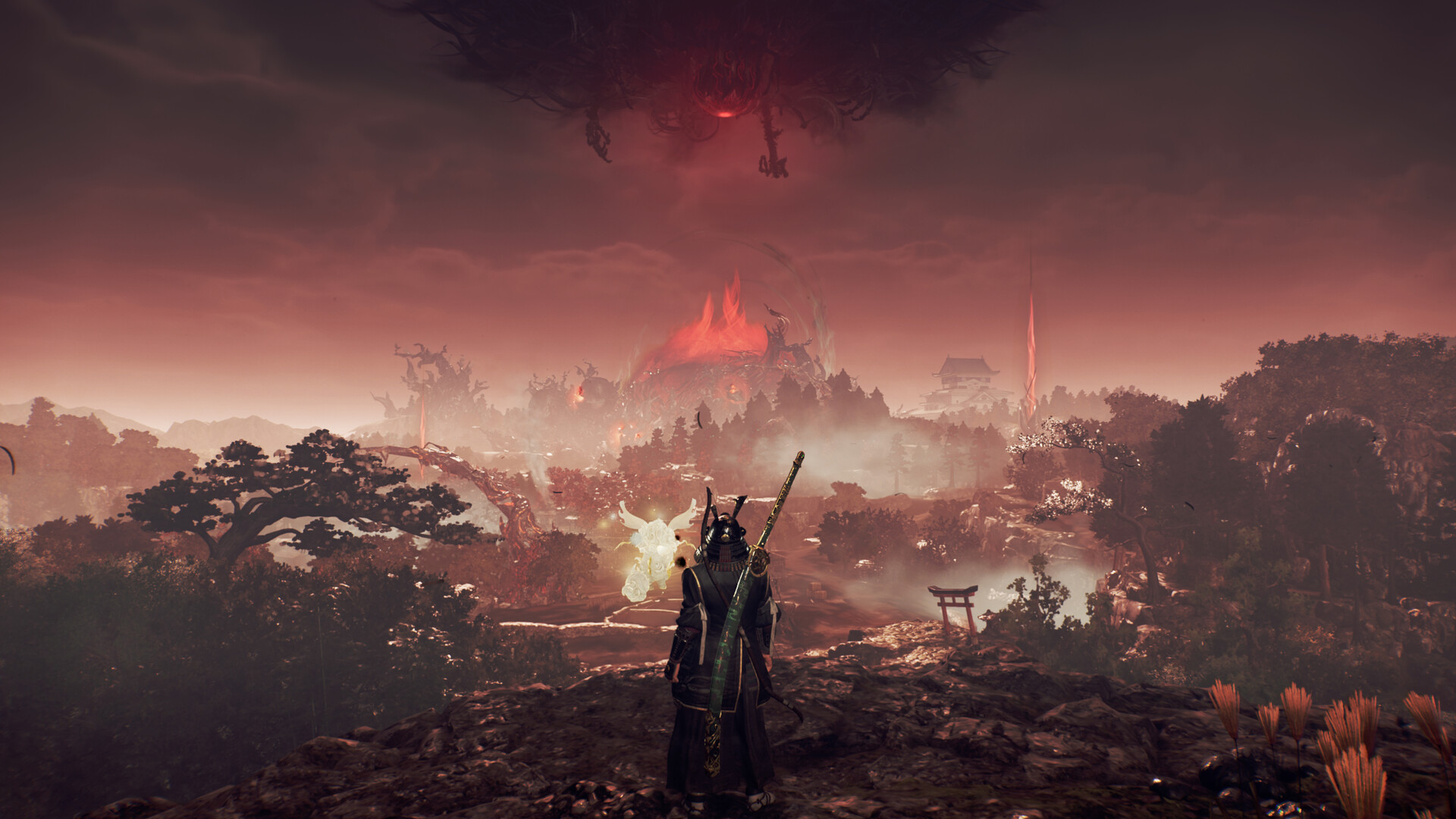
Stay Samurai while direct pressure is creating progress; switch Ninja when spacing, elevation, or a dangerous recovery window makes mobility more valuable.
Switch styles when the combat problem changes. Team Ninja's official roles provide a clean rule: Samurai is for meeting the enemy and breaking defenses; Ninja is for agility, aerial finesse, and changing the geometry of the exchange.
A safe decision loop
- Open by reading, not committing. Identify attack cadence, reach, tracking, and whether the enemy can be pressured safely after a miss.
- Use Samurai when contact is favorable. If the enemy is recovering, guarding, or losing Ki under direct pressure, Samurai's powerful techniques fit the state. Finish a deliberate sequence rather than extending until recovery becomes unsafe.
- Use Ninja when the angle is bad. Switch when the enemy controls the front, an aerial route bypasses the obstacle, or quick movement can create a flank and reset spacing.
- Switch back when mobility has done its job. Repositioning is valuable because it creates an opening. Once that opening exists, convert it into pressure instead of moving indefinitely.
Diagnose the failed exchange
If Samurai attacks keep being interrupted, the issue may be timing or overcommitment rather than low damage. If Ninja movement creates space but no progress, choose a clearer re-entry point. If the switch itself is unsafe, make it after a dodge, enemy recovery, or a known gap instead of during pressure.
Nioh 3's update history includes balance adjustments and bug fixes affecting specific skills, equipment, and systems. This guide therefore does not freeze exact damage, Ki, or frame values. Use current in-game descriptions and the official update page for numerical changes.
Practice one transition at a time
Choose a familiar enemy and rehearse a single reason to switch. Begin in Samurai, create a safe end to the attack sequence, change to Ninja, reposition, and return only after identifying the re-entry opening. Then reverse the exercise: begin with Ninja movement and use Samurai only when the enemy's defense or recovery makes direct pressure valuable.
The goal is not rapid switching for its own sake. It is removing hesitation between recognizing the problem and choosing the style designed to solve it. If a switch repeatedly happens too late, shorten the preceding attack string or leave the movement phase earlier.
Carry the loop into open fields
The official game emphasizes open fields, enemy bases, yokai, villages, side activities, and areas affected by the Crucible. Before entering a dense encounter, identify terrain that supports each style. Open ground can make Ninja movement easier to read; a narrow route may favor controlled Samurai pressure but punish a long recovery.
Use exploration to establish a retreat path and learn the local enemy mix. If a route introduces several threats at once, disengaging and approaching from a different angle is part of field preparation, not a failed build. The style system is more useful when the player controls where the exchange begins.
Co-op boundary
Team Ninja lists online play for up to three players. A style role can complement allies, but this page does not assign fixed party classes or threat rules that the official overview does not document. In a group, keep the same immediate-state logic: pressure an exposed enemy, move when the angle becomes unsafe, and avoid switching simply to imitate another player's build.
Return to the Nioh 3 guide for verified platforms, release facts, and open-field scope.
Sources
QUICK ANSWERS
Questions players ask next
Is Samurai or Ninja better in Nioh 3?
Neither is universally better. The official design gives Samurai direct defense-breaking tools and Ninja mobility and aerial options; the enemy state decides which role is useful.
When should a beginner switch styles?
Switch when the current style stops solving the immediate problem—pressure is no longer safe, or mobility is no longer producing an opening.
HELP SHAPE THE NEXT UPDATE
Missing an answer—or found something outdated?
Send the exact game problem, platform, and version. Corrections are reviewed before expansion requests.