“Simulator” covers games that feel nothing alike. One asks a group to keep a restaurant moving; another turns purchasing, staffing, and warehouse flow into a retail system; another focuses on physical repair order; another manages a settlement through workers and policy; another removes economic pressure and concentrates on arranging objects. This collection compares the work, not the label.
Every game here released in 2026, has a current official source, a permanent Player Guidebook hub, and at least one practical answer beyond a store summary. None is called the universal best simulator. The right choice depends on whether you want money pressure, manual tasks, planning, co-op, or quiet organization.
Swipe table →| Game | Main work loop | Pressure | Multiplayer | Current platforms |
|---|
| Pizza House Simulator | Prepare, cook, serve, clean, expand | Orders and coordination | Online co-op up to six | Windows PC |
| E-Shop Tycoon | Departments, staff, stock, research, logistics | Economic growth | Current guide treats it as solo | Windows PC |
| Low-Budget Repairs | Read brief, protect, repair, inspect, clean | Job scope and rework | Single-player listing | Windows PC |
| Hearth and Hamlet | Workers, resources, research, policy, defense | Settlement tradeoffs | Current store boundary | Windows and Linux support listed |
| The Sorting Bureau | Sort, knoll, group, spread, assemble | Untimed options | Single-player | Windows and macOS |
Pizza House Simulator — coordinate the whole restaurant
Pizza House Simulator is the only co-op game in this edition. The current Steam release supports solo play and online groups of up to six. The core appeal is operational overlap: ingredients, preparation, ovens, orders, cleaning, stock, and expansion all compete for attention.
That width also creates the first real problem: who does what? A group should assign stations before demand rises, keep one person free to clear bottlenecks, and change roles when an upgrade shifts the slowest step. The beginner guide covers the first shift, while the co-op guide handles joining and role division.
Do not assume a console search means a console release. Use the console status page for the current boundary. The game's large Google visibility makes accurate release and platform answers more valuable than fabricated recipes or profit tables.
E-Shop Tycoon — build the retail system behind the shelves
E-Shop Tycoon focuses on departments, employee satisfaction, research, warehouse logistics, and store growth. It fits players who enjoy designing an operation and reading its bottlenecks more than performing one manual job repeatedly.
The useful questions are connected. A new department adds demand for staff and stock. Research can unlock options before the warehouse and workforce can support them. Employee satisfaction changes whether a theoretically efficient layout remains sustainable. Use the departments and research guide, employee satisfaction, and warehouse logistics as one system rather than isolated tips.
This site does not publish a universal money exploit. Economy values and optimal orders need current-build data, while the workflow relationships remain useful without pretending one spreadsheet solves every store.
Low-Budget Repairs — win by doing the job in the right order
Low-Budget Repairs turns renovation into a sequence: understand the brief, protect surfaces, choose the right tool, complete hidden work before closing an area, inspect the requested scope, and clean up. The comedy does not remove the procedural value.
Its main source of failure is rework. Painting before concealed electrical work, skipping protection, or improving something outside the brief can waste time and materials. The first job guide and tools and surface protection focus on that order.
Use the demo versus full game page when older advice conflicts with the released build, and the current update page when a tool or job behaves differently after a patch. Exact room routes need current screenshots; general repair discipline does not authorize invented apartment layouts.
Hearth and Hamlet — manage people, policy, and settlement growth
Hearth and Hamlet moves the simulation scale upward. Workers gather and transform resources, research opens capabilities, buildings create capacity, policies change behavior, trade connects shortages, and defense competes with expansion.
The first useful decision is not “build everything.” It is identifying the current constraint: labor, raw material, processing, transport, research, or safety. Add the building that relieves that constraint and confirm workers can actually supply it. The workers and resources guide, research and buildings, and policies and laws separate those decisions.
Search data also shows strong blueprint intent. The dedicated blueprints page should answer that query instead of forcing the broad hub to impersonate every page. This is an example of depth serving both players and URL clarity.
The Sorting Bureau — organization without an economic race
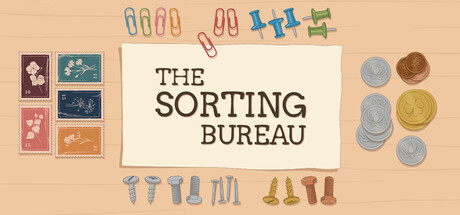
The Sorting Bureau is the low-pressure branch. Its official material describes sorting, knolling, jigsaw work, grouping, spreading out, and untimed play. The task is spatial organization and recognition rather than profit growth.
The order types reference explains how sorting, knolling, and jigsaw rules differ. Piles and Spread Out addresses the controls that make a cluttered workspace readable. The controls and accessibility page covers mouse, touch, and current device boundaries.
Choose it when the satisfaction comes from restoring order and completing a visual system, not from maximizing throughput. It also provides macOS support in a group otherwise dominated by Windows-first releases.
Choose by the kind of pressure you enjoy
Pick Pizza House Simulator for social coordination and order pressure. Pick E-Shop Tycoon for economic systems, staffing, and logistics. Pick Low-Budget Repairs for procedural manual work and avoiding mistakes. Pick Hearth and Hamlet for broad settlement tradeoffs. Pick The Sorting Bureau when you want organization without a timer-driven business.
Then check platform, current version, and guide depth. A theme can attract you, but the repeatable work determines whether the game stays interesting. This collection will change when evidence changes; every game's permanent URL remains stable.
Sources
TOPIC FAQ
How to use this collection
Which game supports online co-op?
Pizza House Simulator supports online co-op for up to six players on its current Windows release.
Which game is best for low-pressure organization?
The Sorting Bureau explicitly offers untimed sorting, knolling, and jigsaw-style work.
Are these ranked from best to worst?
No. They are compared by verified work loop, platform, pressure, multiplayer, and guide support.

 01
01