
GAME TOPIC
Low-Budget Repairs — Release, Price, Platform, and Overview
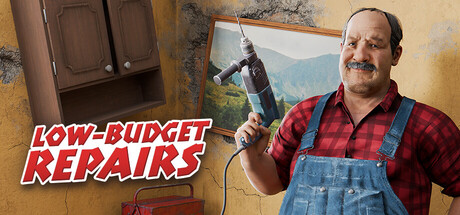
Low-Budget Repairs is a single-player renovation simulator set in 1990s Polish apartment blocks, where cheap tools and corner-cutting can improve profit or create trouble.
EXPLORE THIS GAME
Overview and every live, source-checked section.
Introduction, guides, reviews, updates, and support appear here only when the topic has real content for them.
GAME INTRODUCTION
What to know before you play
Low-Budget Repairs is a renovation simulator set in Polish apartment blocks during the 1990s. You run a small repair business, take jobs and decide how much quality you are willing to sacrifice for a faster profit. It released for Windows on August 13, 2026. Steam showed a US price of $19.99 when checked August 31.
Release facts
| Detail | Current information |
|---|---|
| Release date | August 13, 2026 |
| Platform | Windows |
| Developer | Gray2RGB |
| Publishers | Simplicity Games and PlayWay S.A. |
| Structure | Single-player renovation simulation |
| US price | $19.99 when checked August 31 |
What you do in the game
The official description names flooded bathrooms and complete remodels as examples of available work. Tools come from a hardware store, and choosing cheap equipment is part of the strategy rather than a cosmetic decision.
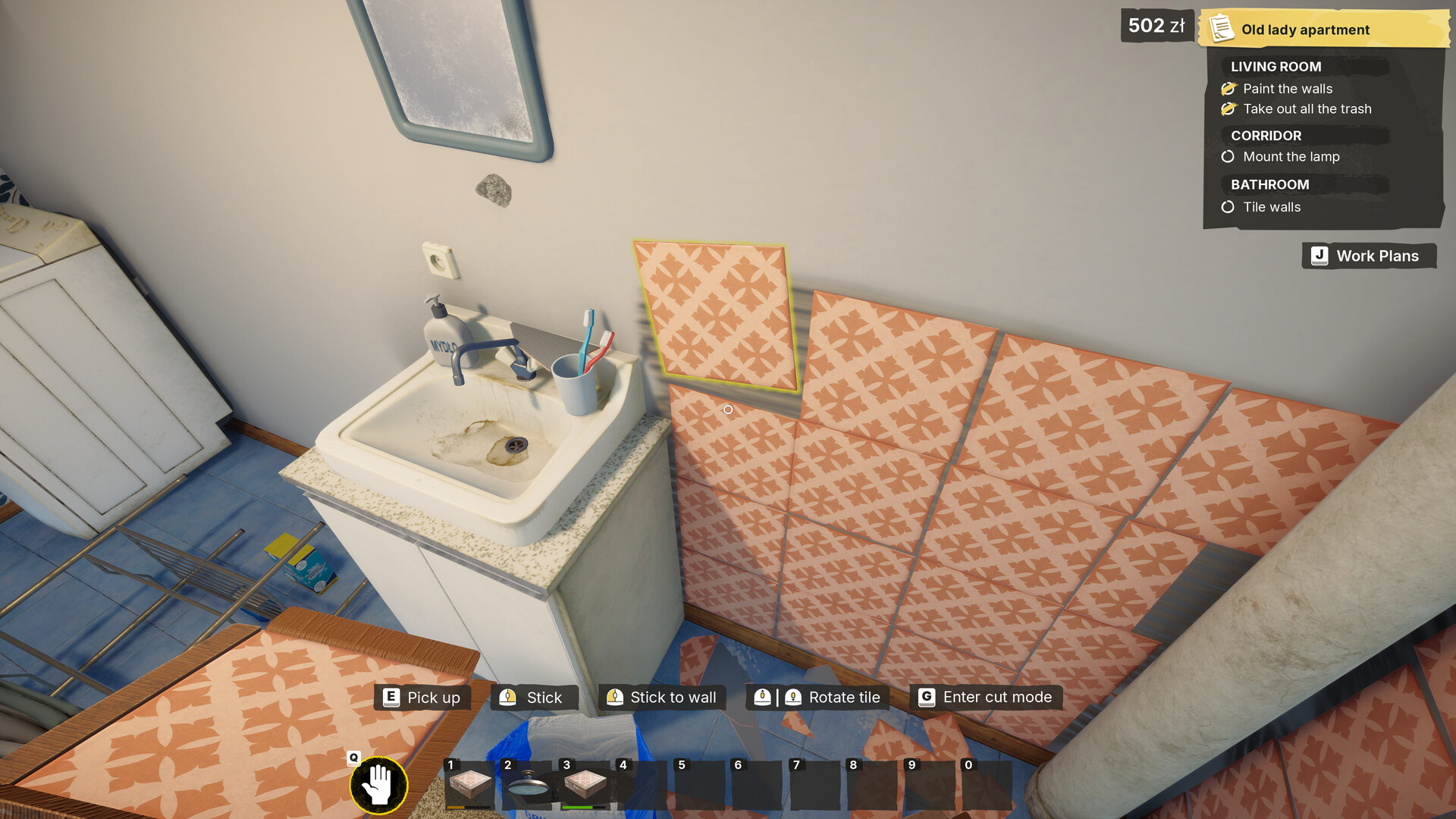
The game's comedy comes from questionable shortcuts: watering down paint, laying tiles without a level or finding an unconventional way to remove furniture. Those examples establish the tone and the quality-versus-profit system. They do not reveal a complete job order, exact tool durability or a guaranteed best way to finish every contract.
Update 4 save and progression fixes
Update 4 is the current official repair baseline checked for this overview. It improves the save system for painted walls and assembled objects such as the sculpture, and completed objectives should no longer become unchecked after they have been finished. The patch also fixes painting and plastering objectives that could appear incomplete after loading a save.
For hard blockers, Update 4 adds protection when the player falls under the map and fixes reported stuck states in One More Time and Broken balcony. The official notes also name fixes for disappearing cabinet collectibles, unpaintable walls above the garage door, a missing First job tutorial, and tile-cutting cases that could drop the player under the map or break tiles after standing up.
The same update reworks wall and ceiling object placement, plus the It's getting hot there and Model citizen missions. These are patch-level improvements, not a promise that every older save or unrelated mission bug is resolved. If a save still blocks progress after updating, keep the save and report the exact mission and objective state through the official Steam forum.
Current practical help
- Tools and surface protection explains which preparation decisions matter before painting, plastering, drilling or assembly.
- Demo vs full game explains the separate demo app and save-transfer boundary.
- Update 1.0.15 remains the dated history page for that earlier interaction, tiling, and progression patch.
The former “first job” page has been withdrawn. It told readers how to collect evidence but did not provide the opening route they searched for. A first-job guide will return only when the steps can be reproduced in the current game.
Sources & evidenceOpen the references used for this page
OFFICIAL SOURCE MEDIA
See the loop—not another copy of the cover.
Each image comes from a publisher or platform-holder source and is selected to explain a different part of the game.

Jobs range from repairing damaged rooms to larger apartment remodels.Official media · source listed with the page evidence
Tool cost and durability are part of the game's profit-versus-quality trade-off.Official media · source listed with the page evidence
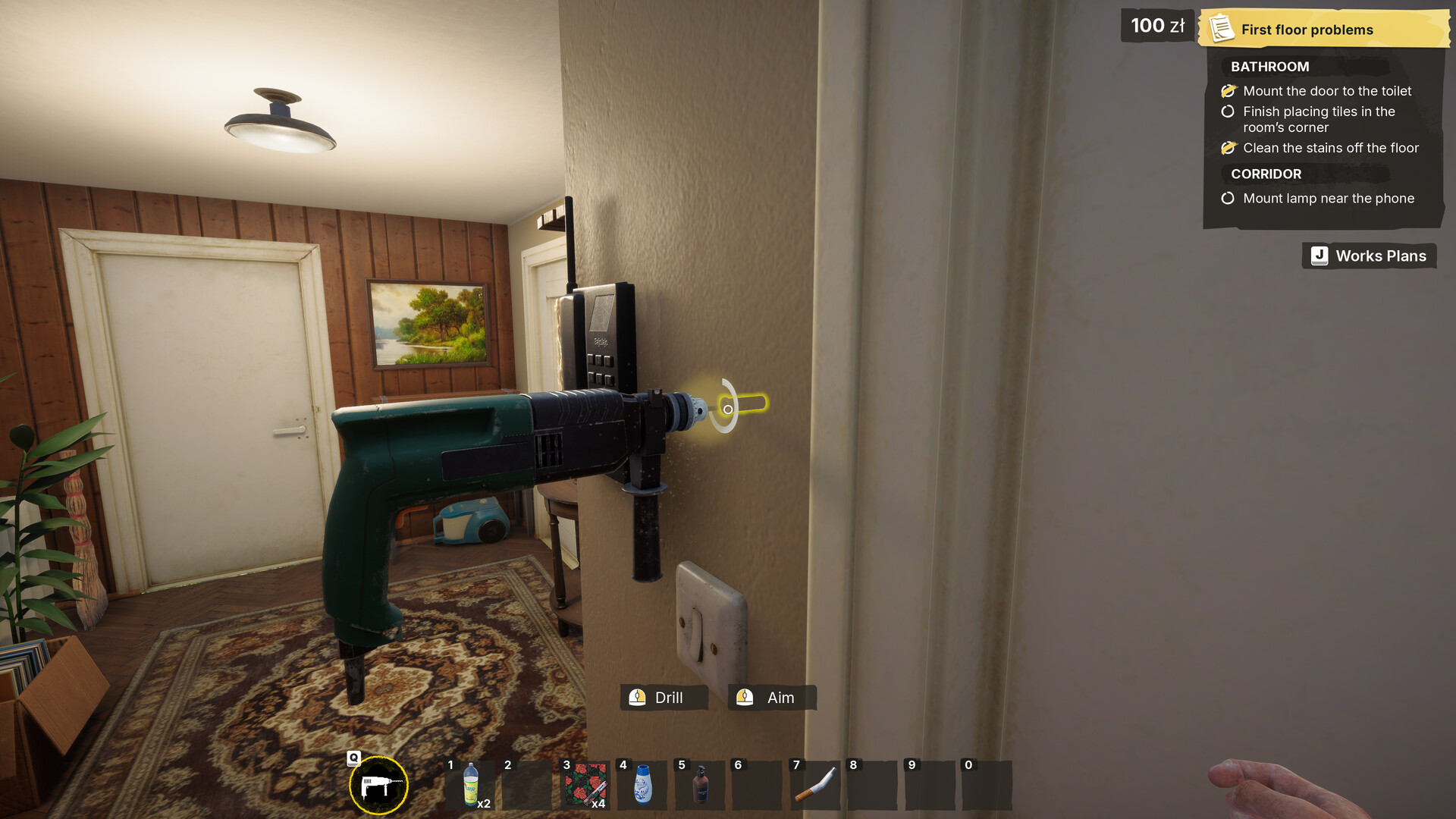
Material choices and shortcuts can affect the finished job and the player's profit.Official media · source listed with the page evidence
OFFICIAL VIDEO
See the game in motion.
This developer or storefront-listed media shows the current game. It is source material, not independent review footage.
YOUTUBE & COMMUNITY
Go to the source when the answer is still moving.
Official channels establish announcements. Forum threads show current player problems and reports—not developer-confirmed mechanics.
HELP MAINTAIN THIS TOPIC
Ask for coverage—or report something outdated.
Send the game, platform, version, and exact question. Reader feedback guides the next verified page; it is not counted as a player review.